SeriouslyGuys

Friday, November 16, 2007

MasterChugs Theater: 'Monster House'

Some quick housekeeping: the Guys are taking off next week because we like turkey. Even more than the internet? Say it ain't so! We'll be back on Monday, November 26. In the meantime, do something important, like...reading a book, or bugging your family members. And alooooooooooooooong with the review:

'Monster House' is arguably the scariest movie that has ever been targeted to children. There are multiple children who will probably say to their parents, “Mommy/Daddy, I’m scared.” Luckily, the movie is also funny, sweet, and more than a little sad. The boys act like boys, the girls act like girls, and the adult figures, of course, treat the kids as if they were insane, like an animated Lemony Snicket story. And who else would be in the executive producer’s chair but Steven Spielberg, who has terrorized more children than the Devil, the boogie man and Barbra Streisand combined.

It’s only a few minutes after the departure of DJ’s parents that he kills his neighbor, old man Nebbercracker (voiced by Steve Buscemi). Nebbercracker has been terrorizing the neighborhood’s kids for generations, and he has a heart attack while engaging in a tirade against DJ (voiced by Mitchel Musso) for stepping on his lawn. Nebbercracker’s death is only the beginning of DJ’s bad day. It’s Halloween, and apparently Nebbercracker’s rickety old house isn’t pleased at DJ’s part in its owner’s death. Nebbercracker’s house is alive and angry. With his parents out of town, DJ and his friends, Chowder and Jenny, can only watch in horror as the house starts devouring neighborhood toys, pets, and eventually police officers that trod on its lawn.

Though much of the computer animation in Monster House is by today’s standards somewhat sub par, the look of the house itself is stunning; a beautiful, nightmarish dream (as opposed to the nightmares that the animation for The Polar Express created) that looks like it might have fallen right out of the head of Tim Burton. It’s a wonderfully alive, fiercely cinematic set piece; an effect so brilliantly conceived that a lesser film might have been content to rely upon merely the house’s toothy appearance as justification for the entire film’s existence.

Robert Zemeckis may have handed the directorial reins to newcomer Gil Kenan, but this is still Zemeckis’ show (he’s the other executive producer), using the same animation technique that both fascinated and disturbed viewers of 'The Polar Express.' This time, it’s the subject matter that does the disturbing; Nebbercracker’s death scene is downright freaky (it’s all in the point of view), and DJ’s subsequent nightmare sequence is not far removed from a scene in 'A Nightmare on Elm Street.' Rock-on Yikes. As a grownup, however, I lapped it all up; the movie’s sense of humor is quirky with occasional blasts of brilliance. Just wait until you hear Chowder’s answer when DJ calls and asks him where his parents are.

The climax involves our heroes deploying a huge construction crane in order to vanquish their adversary. Without referencing it too obviously, the scene hearkens back to the 1967 Hammer science-fiction film 'Quatermass and the Pit.' (A good film, if you haven't seen it; the U.S. title was 'Five Million Years to Earth.') Set around Halloween, "Monster House" manages to cull bits and pieces from Hammer, Hitchcock and the old-dark-house genre of 19th Century literature and early 20th Century stage and film. These bits and pieces manage to move quickly, without indulging in punch lines dependent on Britney Spears or Scientology. Older kids with a taste for fright will likely be interested in how the floorboards turn into big brown teeth and then back into floorboards. Viewers of all ages who survived the 2003 film version of the Disney ride known as 'The Haunted Mansion' will appreciate the improvement "Monster House" represents in the realm of old dark houses with great big secrets. I would wholeheartedly recommend the film to any parent that is getting sick of seeing zebras crossing the Atlantic in their animated features, or , for that matter, anybody in general that wants to have a fun time watching a fun movie.

Labels:

Friday, November 09, 2007

MasterChugs Theater: 'Dave Chappelle's Block Party'

Somewhere between the Dave Chappelle of comedy stardom and the Dave Chappelle of abrupt sabbaticals for contemplative stretches in Africa is the guy who experienced "the best single day of my career" when he threw a party for a few thousand friends and fans. Inviting some of the most gifted and socially conscious hip-hop and R&B artists, he assembled his dream concert on a corner in Bedford-Stuyvesant. Director Michel Gondry chronicles the September 18, 2004, event and its lead-up in the loose-limbed, funny and impassioned documentary known eloquently as Dave Chappelle's Block Party.

Dave Chappelle's Block Party is perhaps the first concert movie since Stop Making Sense to give you a blissful buzz. The buzz comes from the music, which has a loose, burning joy that's rare to behold in a live rap performance, and also from Chappelle's wicked prankster's glee, which spreads through the movie like a happy virus. Block Party features Chappelle as its impresario, on-scene jester, and guiding spirit, and the director, Michel Gondry, echoing techniques he used in Eternal Sunshine of the Spotless Mind, keeps cutting between the run-up to the concert and the event itself, staging the film as a series of flickering time leaps that work on you almost kinesthetically. After a while, you stop thinking about ''past'' and ''present.'' You're eager simply to be in the now, as content to watch a rapping Brooklyn waiter, who turns out to be a brilliant boaster, as you are to see an incendiary stage performance by Dead Prez, with their blistering indictments of white power.

The enthralling spirit of the documentary, its mood of exuberant democracy, extends to every rap and soul performance in the film. A lot of the artists, like Kanye West or Common, summon an intensity of rhythm and attitude that didn't exist in hip-hop before the form went gangsta in the early 90s, yet all of them, in different ways, reject the get rich and screw the world nihilism that ultimately brought gangsta rap to such a dead end. You can feel the longing for a more redemptive era when Erykah Badu, tearing off her Afro wig in the wind, does a gorgeous paean to "back in the day when things were cool," and that spirit extends to Mos Def (who has the greatest dimples in rap), singing about his desire "to be free," or The Roots, with Kool G Rap and Big Daddy Kane, playing the ferocious "Boom." It's part of the rousing offhandedness of Block Party that the finale, in which Lauryn Hill, with her china-doll face and luscious tremolo, reunites with the Fugees to do "Killing Me Softly With His Song," is sublime, but no more so than a follow-up scene in which Wyclef Jean, off stage, leads a group of those CSU marching band members in his great reggae anthem "President", letting them--and the audience--know that, in music as in the world, anything is still possible.

The film is filled with small, magical moments of truth and human warmth, real humor and the kind of positive attitude to which so many people give nothing but lip service. It’s easy to sometimes think that the only aspects of life worth examining in art are the heavy, serious and sad ones, and it’s all too easy to sometimes think that the only way to make a movie happy and life-affirming is to pack it with schmaltz. Dave Chappelle’s Block Party is the cinematic equivalent of that first beautiful day of spring after a brutal winter, when you can take off your coat and go to the park, bob your head with the radios playing to the open, sweet-scented air and watch the pretty girls walk by.

Labels:

Friday, November 02, 2007

MasterChugs Theater: 'The Host'

Earlier in the month, Bryan McBournie made the comment that even though October's would be themed with Asian on the brain, no Godzilla type movies would be reviewed.

As of right now, it's officially November 2, which, at least, the last time I checked, is not part of the month of October. Suck it, Trebek.

Monster movies have always captured audiences' attention. From King Kong and Godzilla to The Blob and Jaws, cinematic monsters leave us both in awe and terror, as we contemplate our effect on nature. In it's bold continuation of the monster movie tradition, The Host is both shocking and surprising, but not because of graphic violence or exploited terror. It breaks from genre conventions so quickly, that you are left off-kilter, not knowing what to expect next. It's a monster movie that plays like the filmmakers have never seen another monster movie, and it's a breath of fresh air in a rather stale genre.

Thanks to Americans who blithely pollute the Han river (we just screw up everything), a slippery, amphibious monster with fearsome mandibles, a prehensile tail, and an endless supply of surprise moves haunts the sewers of Seoul. The creature is designed by Weta, the New Zealand special effects shop responsible for The Lord of the Rings, but the heroes are 100 percent Korean. When the monster abducts adorable Hyun-seo (Ko Ah-sung), the rest of her family has to get past untrustworthy government agencies and backstabbing salarymen to find and save her: her ramen-vendor father (Song Kang-ho) and grandfather (Byeon Hie-bong), drunken Uncle (Park Hae-il), and her aunt, a perennially losing archer (Bae Du-na.) Too bad all of them are prone to screwing up just when it matters most.

Shot as beautifully as any art-house film but paced like a blockbuster, The Host manages to satisfy (almost) all of our genre expectations while curious details give the characters life above and beyond the necessities of mutant fodder. Our hero has coins stuck to his face when we first meet him, disposable fishermen worry about their daughters' favorite cups, and lazy-eyed scientists replay the finale of One Flew Over the Cuckoo’s Nest as farce.

Breaking all box-office records in Korea's history, The Host is a movie about a mutant that's a bit of a mutation itself; with unflappable confidence, director Bong Joon-ho grafts droll humor and sly political commentary onto the DNA of a classic Hollywood creature feature. The result strikes a perfect balance between broad social satire, comedy, and honest-to-god horror thrills. In case we had forgotten, Bong Joon-ho proves that it's possible to make CGI extravaganzas that entertain without insulting an audience's intelligence.

For all the flash and the bang, Bong never loses sight of where The Host's true power lies. This is a film about the power of family, a film about the small people who make a difference simply by doing what little they can while the powers-that-be flail about aimlessly in their self-imposed ignorance. While it meets the demands of its chosen genre on every level it also simultaneously manages to find new territory to mine, new legs for the old beast. The ending surprises while it satisfies, simultaneously playing directly to expectations while also refusing to play the easy hand. It is simply a very strong effort that continues to cement Bong's reputation as one of the world’s great film talents. Very highly recommended.

Labels:

Friday, October 26, 2007

MasterChugs Theater: 'The Eye'

Ever since Simone Mareuil had a nasty experience with a razor blade in the surrealist classic Un Chien Andalou, horror movies have always had a special relationship with eyes. Sliced, poked, gouged and occasionally popped out of its socket, the eyeball has become the most vulnerable, and most traumatized, organ in film history. The second film from the Pang brothers cultivates horror by taking eyeball horror to new heights, with a story about a cornea transplant that goes horribly wrong. The Eye recalls the hours of terror of a blind young woman, Mun, who, after recovering her sight thanks to a successful transplant, sees her world turned upside down by the presence of ghosts.

By reading that synopsis, you might be telling yourself "Not another 'I see dead people' movie again!" Stop right there. Aside from that very general premise, that's all that The Eye has in common with that line. The story is very well built, maybe a bit slow paced in the middle but always keeps a good nervous rhythm that will keep you tense during the entire movie. If anything, I'd say that the structure of the movie is very similar to not The Sixth Sense, but Ringu, mainly in a sense that there's not too many frightening moments during the whole movie until the final ending which just explodes right in your face.

The cast is also very surprising; the presence and acting quality has really given a deeper feeling to the movie. Angelica Lee plays the lead role of Mann and her acting is just perfect for the role. We don't see much of the other characters since the story really evolves around Mann and her new psychic ability but none of the characters really felt out of place and the acting quality is always excellent during the entire movie; however, another interesting character was the therapist trying to help Mann who is played by Lawrence Chou. There's a great complicity that will develop between these two characters, but fortunately for us the movie doesn't fall into stupid cliché love story and always keep that part of the movie well connected to the movie without taking over the scary feeling of the movie.

On the frightening side, the movie is surprisingly very effective. Hong Kong's attempts at the horror genre tend to come out pretty lame and stupid when they try something serious, but The Eye is really one of a kind. The special effects, by Centro Digital, are flawless. You won't find any stupid makeup ghost trying to scare you with a flash light on his face here, but great and frightening realistic visual effects. I didn't find that there was a lot of scary moments during the movie but the atmosphere was always very tense and mystical which really keep you on your nerves all along the movie. Particularly noteworthy is the elevator sequence, where by use of editing, performance and dread, the Pangs arguably create the most memorable scene in the genre since ever. There's also a lot of emotion and panic at the end of the movie, something that will make you remember this movie for a long time for sure.

Premiering in 2002 and in the wake of The Sixth Sense and its many imitators, Mun's visions of dead people are so conventional that it's hard to find any of this particularly frightening, and as the film reaches its inevitable conclusion in which vision, precognition and tragedy merge, the plot developments might as well have been written out in Braille. Strange metaphor aside, that's a good thing. Hollywood has successfully remade Ringu, and such a successful item as the Pangs' film is inevitably following. Tom Cruise has his own version in pre-production. Whatever the final merits of a project that will inevitably be more star driven and glossier, for the time being horror addicts can be recommended the original, which, like Ring, has a unique sensibility that is hard to beat. As a frightener, The Eye rarely blinks, and is best watched with the lights on. Don't say I didn't warn you.

Labels:

Friday, October 19, 2007

MasterChugs Theater: 'Uzumaki'

Uzumaki convincingly introduces you to a world undergoing such a change in fundamental rules. We watch as the bodies and minds of its occupants undergo eye-opening changes and as the natural world literally changes into what it was not. The world of Uzumaki is indeed a world within a psychadelic nightmare. Run as fast and as far as you may, for every path you take, every corner you round, every horizon you reach will produce ever-greater mind-boggling transformations.

Where does this mind screwing begin with? The inhabitants of Kurouzu-cho appear to all lead very normal lives. You’ve got the young couple Shuichi and Kirie, along with there respective families that all seem very functional. Things change though, when this peace is shattered by a sudden and mysterious obsession with spirals! It starts with Kirie’s dad, as he photographs snails and collects spiral pottery, but eventually the curse runs rampant and there’s no turning back! Death lies around every corner, and this movie takes paranoia and insanity to a whole new level.

The movie shines visually, and you will never see anything like it. It’s filled to the brim with berserk close-ups and great lighting. The whole movie is just plain unsettling. Even in the rainbow bright scenes from the start, you know something ain’t right. Best of all, this movie has so many hidden things going on visually that alone merit repeat viewings. Hidden spirals and corpses in the background give you good incentive to rewind. If forced to, I’d compare the movie’s visuals to a bucket of vomit doused on a huge mound of rotting corpses. For clarification purposes, that's a good thing. Special effects are pulled off in a smooth way. A bit of computer animation was used for big things, like spiraling emissions from the smokestack of recent cremations.

If I have any complaints whatsoever with this movie, it would only lie in a couple scenes that could stand to be cut. I know we all like some good solid character development, but one of the few scenes that tries to accomplish this comes off as forced and ultimately boring. No need to name scenes, because you’ll probably know when you get there. While some may complain about the ending, Higuchinsky (the single named director) knew there was only ONE solid way to end mayhem like that ... and oh, how it's solid. From the very first scenes of the movie, you can recognize the quality of imagery and creative visuals. The sense of visual satisfaction only increases as the story continues, and as the manifestations of vortex became more and more bizarre, more and more terrifying, you will get freaked out by this movie. This truly is a psychadelic nightmare drawn in comic book proportions which will leave you wondering if in fact your arms might not someday wobble spaghetti-like toward the floor. Highly recommended.

If you can't find a copy of this (which is a strong possibility), go out tonight and watch 30 Days of Night. The original story is brilliant, and with Sam Raimi attached to the movie, so should the film be.

Labels:

Friday, October 12, 2007

MasterChugs Theater: 'Ringu'

Asian horror month at MasterChugs Theater continues this week with the movie that most probably brought the very genre of Asian horror to the forefront: Ringu. Before there was The Ring, there was Ringu, the Japanese horror/thriller that was remade virtually verbatim from this original. Of course, it's a little less Hollywood-shiny, a little less in-your-face-scary, and a lot more subtitled. But the guts are the same: an unlabeled videotape is making the rounds ... watch it, and you die in one week's time. A skeptic television station employee discovers the tape after her cousin watches it and dies, watches it herself, and soon draws her ex-husband and nephew into the quest to find out more about the tape's origins and, hopefully, avoid death for all three of them.

The tale revolves around the history of Shizuko Yamamura and her daughter Sadako. Their story starts on Oshima Island where the mother's psychic abilities eventually come to the attention of an academic bent on proving the existence of ESP. During a highly publicized test that goes awry, the dreadful abilities of Sadako emerge, setting the stage for the tragic demise of both mother and daughter and a series of mysterious death-by-terror cases 30 years after. The niece of news reporter Reiko Asakawa becomes one such case, and sets Reiko hunting for clues leading to a cause of death, a search which leads her to a video tape which, once watched, results in death after seven days. After she, her ex-husband Ryuji, and by mistake her young son Yoichi watch the tape, the clock starts ticking and Reiko's investigation takes on a whole new urgency.

The ensuing tale gradually builds in eeriness and imagery, and crescendos in a rather hair-raising climax. There is indeed pay-off here for those looking for a good horror movie. Amazingly, director Nakata Hideo accomplishes this without any recourse to computer generated "special effects." Both feet of the viewer are planted squarely on the ground as the creepiness unfolds.

Much of the spiritual dimension of the story revolves around ESP, a topic which seems to perpetually fascinate the Japanese. A second Japanese fascination which emerges here is the power of technology to aid in the quest to understand the supernatural. An explanation as to why Sadako employs psychically recorded VHS tapes to accomplish her curse is nowhere offered in Ringu. Such an explanation is doubly wanting given the fact that Sadako would not have known about the existence of such multimedia given her untimely demise so many decades ago. Nevertheless, Sadako's choice of magnetic tape and television allows our characters to pull out all sort of nifty gadgets to analyze and decipher the cursed clue. And yet were it not for the fact that Reiko's own ex-husband and son possess psychic ability, this investigation wouldn't have gotten anywhere. While you wrap your head around that, I should probably mention that the Japanese have a bit of a fascination with ESP. In at least two crucial points where the trail to Sadako appears irrevocably cold, good ole ESP steps in and moves things right along.

The movie teases only a few glimpses and short looks at the main antagonist, which only adds to the heightened sense of fear. The fear of the unknown, or in this case the barely known, can offer more negative stimulation than the over saturation of a guy in a hockey mask. The girl in question, Sadako, never really appears in full "ready to do harm" mode until the end of the movie. By design, this is really one of the best horror villains of all time. Much like Damien in the “Omen” trilogy, we are given a terror in something that is not an everyday concern: a young child. The premise is combined with a “less is more” look. Sadako is not a "10 hours in the make up chair" villain. Rather, the simple look actually adds realism to the character ... and seriously, she's one creepy looking chick.

The film does its best to be unsettling. The first meeting between Yoichi and Ryuki in front of Reiko’s home is uncomfortable. Also discomforting is the date stamp used to count down days until one week has passed. This is a direct homage to The Amityville Horror which used the same technique. Even the ending, which is very Japanese in nature, leaves you with questioned resolve. It is common for Japanese films, especially horror films, to not offer a happy "Hollywood" ending. Unlike the Nightmare On Elm Street series and other icon of horror films, Ringu is more about the myth of Sadako the her itself, a mysterious exploration into the life of a poor girl controlled by others who is driven insane and forgotten, only in her death can she have her voice heard. It is this slow discovery of a innocent driven into total madness and the creation of pure evil that traps the viewer in it's horrifying grasp and than releases it sending the viewer into a unforgettably frightening conclusion. If you can get over the rather silly ESP plot, you're in for what should be considered by all to be a perennial horror movie classic.

Labels:

Friday, October 05, 2007

MasterChugs Theater: 'Audition'

It's time for another theme month, ladies and gents. With it being October, I'll be looking at horror, but this year, it's not just any horror-no, we're going down the skeevy and kinky fetish route and taking a look at Asian Horror. That said, I'm kicking it off with a reprint review of mine of one of the better forms of the subject, Takashi Miike's "Audition." If you haven't sat down and watched this creepy tale yet, do so. You won't be let down, I assure you.

We all love a good old-fashioned traditional romance tale, don’t we? You know the kind of thing I mean … boy meets girl, boy dates girl, boy discovers girl’s shady secrets, girl turns into psychotic S & M torturer … sniff. It brings tears to your eyes, doesn’t it?

Well, the last half-hour of Audition will certainly bring tears to your eyes. My mom always said you should watch out for the quiet ones. Welcome to what is perhaps the least extreme of Takashi Miike’s films and the one that truly cemented his reputation outside Japan as being one of the most extreme directors in the world, Audition; a film with such a horrifying final half-hour that it holds the dubious honor of having had the most audience walk-outs of all time during its premiere.

Widowed for several years, Shigeharu Aoyama (Ryo Ishibashi) has raised his son with dignity but without real joy in a large house where silence echoes a painful absence. Envisioning himself remarried without really knowing how to go about it, the shy 40-something announces his project to his friend Yoshikawa (Jun Kunimura), a film producer who proposes putting on a false audition in order to find him a wife. Reading through resumes, Shigeharu discovers a very personal letter from an actress with whose pain he immediately identifies. He becomes infatuated with the young woman and decides to pursue her after the audition. Shigeharu and Asami (Eihi Shiina) become lovers until the day she disappears without a trace. Shigeharu then sets out to find her and slowly plunges into a nightmare that's all too real.

Based on a novel by Ryu Murakami, author of "Tokyo Decadence," and on a scenario by Daisuke Tengan, the son of Shohei Imamura, the movie affirms the unique vision of director Takashi Miike, beyond the yakuza films like Dead or Alive that made his reputation. Audition is above all a work of extreme precision that owes its success to the orchestra conductor's talent who meticulously directs this symphony of horror. Starting in a hospital room at the bedside of Shigeharu's wife, the film has an air of bittersweet drama before transforming into a romantic comedy during the audition scene. As the audience has acquired a sincere affection for the main character, viewers believe themselves to be embarked on a light comedy in the vein of Shall We Dance? The change of tone at the time of the audition as well as the film's title establish this scene as a pivotal to the plot, and so the audience expects unforseen consequences. The film then follows the game of cat and mouse between the two lovers while some strange scenes furtively appear, heralding what's to come. The transition is made smoothly until we meet Asami's adoptive father in a room bathed in dark red light, a sign that Shigeharu, like the audience, has entered purgatory. Everything then crescendos into terror while the descent into hell is inescapable.

The psychological horror and gore of the climax make it almost unbearable. But what makes the end efficient is the way in which the writer and director handle cinematic conventions. Contrary to Italian gore (one thinks of Dario Argento and Lucio Fulci) where each film is watched with derision as a puppet show stripped of any credibility, Audition starts like a conventional film and chloroforms the audience into an inoffensive and charming love story. Caught up in the system of a romantic narrative and the realistic context of the story, the audience is then brutally awakened by an unexpected and painful shot of horror.

Miike himself vehemently denies that Audition is meant as social criticism. In fact he denies the existence of any kind of artistic pretense in his films, instead stating that he is in no position to criticise his fellow men and that he simply wants to create the best possible result from the material offered to him. Whichever way you look at it, the film works. Psycho-thriller, social indictment or both, Audition proves to be a powerhouse.

Labels:

Friday, September 28, 2007

MasterSnee (Home) Theater: 'Reaper'

Chugs is out with the measles this week, so I'm filling in. I decided to approach from a different angle, though. I hate movie theaters; the crowds, the sticky floors, the Mormon "Foundation for a Better Life" commercials and the crappy movies have left my fiancé and I bunkered down in our living room like Adolf and Eva. The screen and sound always work, the food's cheaper and tastes like actual periodic elements and television is actually improving.

Now that reality television has finally hit rock bottom (Flava Flav? Really?), the networks we've come to loathe are premiering quality scripted shows again. Well, except CBS, which still hasn't recovered since Nash Bridges ended. Or ABC, which still believes TGIF was its greatest contribution to American society. Or NBC. Fox is still "eh": no longer the maverick network of the 80s and 90s, they rely too heavily on their established cartoon staples, which haven't been novel in at least three years.

No, network television has only two balls in its sack these days: FX and the CW. The Guys are huge fans of FX's Rescue Me and are known for singing the Von Bondies sober or blacked-out. The other network, CW, launched Kevin Smith's new television series on Tuesday, Reaper.

Kevin Smith has always been one of my personal heroes, so I had no problem ignoring House to catch this pilot episode. Since seeing it, I've released just how stale House and other medically-themed TV shows have become since ER. Scrubs is the crowning achievement in medical dramedys, so any further attempts in the genre merely piss in the wind.

That said, Reaper is Smith's first truly viable project without the Jasons Mewes and Lee. Where Jersey Girl had heart, this pilot has life. It is a departure from the View Askewneverse that ventures just far enough away to not seem as contrived or sappy.

Don't get me wrong--there are the typical Smith slacker archetypes that populated my favorites of his films.

The main character, Sam Oliver (Bret Harrison), is the slacker that moved back in with his parents after failing his only semester at college because it "made him sleepy." This lack of ambition causes him to work at his high school job, a chain hardware store inspired by Lowes and Home Depot.

Side note: Bret Harrison looks disturbingly like another Affleck brother.

He works there with his slacker best friend, "Sock" Wysoki (Tyler Labine), who is 25, also lives with his parents and doesn't care what he does so long as it's with Sam. Unlike Brodie or Randall, Sock doesn't "wax intellectual." Instead, he's working retail because it may be his only marketable skillset, though he even fails at that: on a sales chart, he scores the Bluto Blutarsky "zero point zero." In fact, that's probably the best comparison to other ficitional works: he's a coarse, talking Bluto. Or Jack Black, minus the rigga-doo-doos.

Sam's love interest, Andi (Missy Peregrym), works there, too, but--like all of Smith's other female characters--is going to college so that she doesn't work the retail floor for the rest of her life. Unlike Veronica, she has yet to pressure Sam into attending classes with her, though she takes umbrage as easily as Brandy Svenning.

Surprisingly, the slacker supporting character isn't Walt Flanagan or Willem (a.k.a. Snowball), but co-worker Ben, who is played by Old School alum Rick Gonzalez.

So, the pre-existing set-up is similar to Clerks, but the plot is the anti-thesis to Dogma. Unlike Bethany's mission as the decendent of Christ to prevent two rogue angels from proving God wrong, Sam is charged by the Devil (Ray Wise) to recover fugitive souls from Hell. Why Sam? Because his parents sold his soul to Lucifer before he was even born.

This pilot is the quintessential origin story of the demonbuster, Sam, who even uses a Hell-engineered dust buster to collect the combative souls. It's less cumbersome than proton packs and ecto-traps, and it postpones the eventual lawsuit from Ivan Reitman. He discovers his newfound career and accompanying hellish mental powers on his 21st birthday, at which point he is no longer his parents' ward and, therefore, accountable to the Desolate One.

But since this is a comedy, Sam doesn't just have to learn to kick demon ass, but how his new job and powers affect his daily life: the mundane acts of drinking, flirting and employment that action movies and dramas either gloss over or completely ignore. (Seriously, when was the last time the Superman franchise explained how Clark Kent writes news stories when Superman is busy saving the entire world? Or how Bruce Wayne manages the multi-billion dollar Wayne industries or romances women other than by buying things and revealing his secret identity?) As Sam learns to control his abilities, Sock hilariously throws heavy objects at him to test his telekinesis. It's a lot less emo than Joss Whedon's Buffy, who routinely falls in love with vampires and then whines about not finding nice men who can go to the beach.

As with any Kevin Smith endeavor, there is more to read between the lines than, "Sam sends a demon back to Hell with hiiiiiiiilarious results." Sam must also wrestle with moral issues, such as whether it is okay to work for Satan if you're making the world a better place. (FDR would say yes.) In the Peter Parker sense, he also wants to start a relationship with girl-next-door Andi, but his hazardous work already imperils Ben and Sock when they tag along. And finally, he has to decide who is responsible for his current metaphysical status: his parents, who sold his soul, or himself for not pursuing more meaning in his life in the first place.

The Devil simultaneously simplifies and compounds his situation. On the one hand, he's willing to help Sam find meaning in his existence with an important job, but on the other, he does not tolerate failure, which threatens Sam's mother with burning in Hell. He's the conspirator and the tempter in that he know what Sam and the audience want and readily supplies it, yet he also holds all the strings and can withold it at will. The Devil, in this incarnation, is the Miltonian picaresque tragic hero, but with the flair of Lord Byron's Don Juan. Sure, he's evil, but he's also extremely likable, just like that guy in high school that was always on probation.

And finally, there's the social commentary that is inevitable whenever Smith mixes the metaphysical with the physical world. Among the rules that define this universe is that "any place that seems like Hell on Earth, is," which is where captured souls are desposited (e.g., the DMV). Also, some people deserve eternal punishment for their crimes while living, though the very institution that punishes them also encourages them to act out in the first place (e.g., governments warring against terrorist organizations they armed only a few decades before).

But enough with the high-falutin' analysis that proves I have a degree. Reaper is Kevin Smith's chance to really explore new characters without too much fan service. Its similarities and differences from his past work will be interesting to watch over the next 12 episodes, and since it's not on ABC, we should be able to see all of them without buying a DVD collection. It airs Tuesdays at 9 pm eastern/8 pm central on your local CW affiliate.

Labels:

Friday, September 21, 2007

MasterChugs Theater: 'The Doors'

A great writer once wrote that the problem with American lives is that they have no second act. Never is this more apparent than with the story of Jim Morrison, whose childhood was lost in a mist of denial and his maturity interrupted by an early death. If we can trust Oliver Stone's film, The Doors, life for Jim Morrison was like being trapped for months at a time in the party from hell. He wanders out of the sun's glare, a curly-haired Southern California beach boy with a cute pout and a notebook full of poetry. He picks up a beer, he smokes a joint, and then life goes on fast-forward as he gobbles up drugs and booze with both hands, while betraying his friends and making life miserable for anyone who loves him. By the age of twenty-seven he is dead.

The Doors is an earnest biopic that charts lead singer Jim Morrison's introspective self-destruction, fueled by a monumental drug problem and mindbending idol status. Stone piles on the psychology and stretches the flower-power myth with all its attendant hippy philosophy and heavily stylized trippy visuals. Somehow, Val Kilmer, lends it a veil of truth, managing to resemble the late singer surprisingly effectively. His vocal impersonation of the Lizard King is remarkable and he wears a pair of leather breeks better than most.

However, Kilmer is plugged into a narrative structure that treats him like a character in a Sophoclean tragedy, doomed to an inevitable implosion and premature death. This takes the easy way out, as it removes personal responsibility from the equation. What could Morrison, his family, friends and band mates have done to produce a different outcome? What role did the carnivorous and self-serving media play in Morrison's self-destruction? These become non-issues if the protagonist is trapped in a Greek drama that demands his death. Kilmer's bravura performance and Stone’s fatalistic approach also make the other actors non-entities who flitter like mute butterflies about the edges of the film.

Perhaps I am oversimplifying. After all, Stone does offer repeated scenes of Morrison's petulant behavior, his narcissistic obsession with death, his child-like self-centerd universe, which seem to point to the man as his own worse enemy. But Stone prefers to indicate that these behaviors and obsessions were, as Wordworth might say, the child being father to the man, the drugs and alcohol essential ingredients to his barrier-breaking development as an artist. In the age of "Just Say No" this is a brave assertion, and I applaud Stone's stones, but to excuse Morrison's deplorable behavior on the grounds that he is "an artist" seems self-serving.

The Doors also makes the fatal mistake of taking an essentially minor talent, and elevating him into the pantheon of great artists. Morrison was not, as Stone's pretentious closing shots of the Parisian cemetery Pere Lachaise in which Morrison is buried, an equal of Oscar Wilde, Proust and Moliere, and for Stone to put him in their company invites the sort of derision to which Stone seems rather sensitive. Indeed, in an early scene Stone--playing Morrison’s film school teacher--criticizes Jim’s film as "a bit pretentious, don’t you think?" I don’t know if this is a self-conscious attempt to disarm the critics before they can sharpen their pens, or an unconscious admittance of guilt. Either way, it is a telling moment and aptly describes the movie.

In the end, Stone leaves a large question unanswered: How was Morrison able to leave the country after being sentenced to a jail term for public indecency? But leave he did, to die of an "apparent heart attack" in Paris, where he lies buried to this day, his tomb a mecca for his fans, who have spray-painted all of the neighboring tombs with exhortations and obscenities. Even in death, Jim Morrison is no fun to be around.

Labels:

Friday, September 14, 2007

MasterChugs Theater: 'The One'

Jet Li has joined the illustrious dubious ranks of those martial arts stars playing opposite themselves in a film--including Jackie Chan and Jean Claude Van Damme. But instead of playing a long-lost twin brother to himself as in the other films, Li’s actually himself squared--another version of Jet from a different parallel "universe." That’s right: Only Jet Li can kick Jet Li's ass. Borrowing from the Many Worlds interpretation of Everett's Relative-State Formulation of Quantum Mechanics, The One showcases a scenario of what happens when events in these different universes become intertwined.

The setting for this plot is a "multiverse" consisting of many parallel universes (using the Everett interpretation, there are an infinite number). The first Universes that discovered this "fact" went about creating a police force to ensure no abuse occurs by traveling from one universe to another through "quantum wormholes." Yulaw (Jet Li) is a former officer in this force who discovers that his strength increases when he kills a version of himself from another universe. He then goes about killing the 123 copies of himself that are known to exist and their strengths flow to him and his one remaining counterpart, Gabe (Li again), in the 124th universe (arguably there are more than 125 Universes, but a Yulaw-like personality does not exist in them).

Gabe, a regular cop in a universe similar to ours, is unable to explain his sudden increase in strength. That is until Yulaw comes after him. Aided by two of the Multiverse police, Roedecker (Delroy Lindo) and Funsch (Jason Statham), Gabe must stop Yulaw before Yulaw becomes "the one" standing, which would allow him to gain an enormous amount of power and rule the multiverse as a despotic god.

The acting is also pretty dismal, especially poor Statham, mired here in a laughable role and an absurd New York accent. Jet Li’s career was the only one to get a significantly believable boost (Hero, anyone?), mainly since most of his role revolves around a handful of awesome fight sequences. Nearly as impressive as Li's moves are the special effects that give already incredible fights extra voltage. The filmmakers take the Matrix slow-mo bullet thing a few steps further, almost to the point of abuse. But, man, is it cool to watch. And, scenes exhibiting Li’s superhuman strength--especially one where he picks up a police motorcycle with one hand and slams it down on a cop like a trash can lid--are equally visually fun.

However, much beyond that FX eye candy and an occasional clever joke related to inter-dimensional travel (like a jab at one universe which has a President Gore and another where President Bush proposes a health care system), there’s not much substance to The One. But I’ve got to give the filmmakers props just on the basis that they cast American Movie's Mark Borchardt in a minor role. It was good to see that guy getting some work.

Recommended, but leave your brain at the door ... but make sure to bring an extra pair of eyes. Just in case.

Labels:

Friday, September 07, 2007

MasterChugs Theater: 'The Sting'

Way before Guy Ritchie's polished bad boy style and hugely complicated plot twists pulled in the punters, The Sting pioneered the genre. This long time stalwart of basic cable movie channel broadcasting remains an entertaining way to spend a couple of hours and, unlike Lock, Stock and Two Smoking Barrels, it's more about charisma than greed.

The plot is both incredibly simple and yet incredibly multi-layered; a story synopsis won't do it justice.

Johnny Hooker (Robert Redford) is a young con man who was taught the ropes by his partner in crime, the legendary Luther Coleman (Robert Earl Jones). Luther longs to get out of the racket, so they pull one last big scam; however, this time they choose the wrong guy. Turns out that if you mess with "The Boss," Doyle Lonnegan (Robert Shaw), you get put on his hit list with no mercy. Who would've guessed? After a crooked cop (Charles Durning) gets in on the action, things go even more awry.

Seeking payback, Hooker teams up with another great con man, the smooth but cynical Henry Gondorff (Paul Newman). Together, they recruit a motley gang of fellow crooks and accomplices (including Eileen Brennan and Ray Walston) to take down Lonnegan. An increasingly twisty, endlessly crafty series of scams, double-crosses and ingenious ruses ensue, all to the tune of "The Entertainer", the iconic piano rag by Scott Joplin. Payback could only be sweeter if it was done by a diabetic in a candy store.

The one problem with the movie? The Sting is not really about anything. It is an immensely enjoyable, impeccably produced bit of cinematic entertainment, but it doesn't add much to the sum of human consciousness. It might have had a bit more cultural relevance had it examined the racial and class tensions at more than a surface level.

That, in hindsight, leaves it a somewhat surprising choice by the Academy to beat out other, more "serious" front-runners for the 1973 Best Picture Oscar, including American Graffiti and The Exorcist. But whatever, because ultimately, awards are pretty silly in the first place. And why not just revel in the fine wine, even if it is made out of sour grapes? I've had so much fun revisiting The Sting again and again. There really is something to be said for any film that can hold up so well after three decades. It's truly timeless.

Critics of have said that the movie is all chemistry. Don't get it twisted, as that's a great thing. Indeed, the pure star wattage of Redford and Newman goes a long way in giving the film its heat. But such a simple statement does a disservice, not only to the rest of the A-list cast, but also to David Grant's expertly-crafted script and George Roy Hill's energetic direction. The Sting is so darn entertaining, not just because Redford and Newman flash their toothy grins, but because it works on every single level. Each scene pays off the one before, and sets up the next one, expertly. The writing, the music, the performances, the cinematography, the editing--not a single moment is anything less than elegant, refined and a sheer marvel.

Athletes sometimes describe a temporary state of heightened concentration as being "in the zone." It is a magical, mystical area that a performing athlete enters where the body, mind and spirit align perfectly. Everything is firing on all cylinders, enabling peak performance. The term is not used much to describe creative pursuits like movie-making, but perhaps it should. I'm referring here to those rare blessed moments when a film achieves a kind of perfection with such apparent ease that they, too, have a mystical, magical quality to them. Perhaps I'm overstating my case, but if ever a movie was "in the zone," it would be The Sting. One of the all-time greats, this film is just pretty darn wonderful.

Labels:

Friday, August 31, 2007

MasterChugs Theater: 'Intolerable Cruelty'

Intolerable Cruelty, bears all the hallmarks of a romance--a dashing hero, a beautiful heroine, a series of trials. Yet here the hero is a successful divorce lawyer, the heroine is a manipulative gold-digger, the trials take place in a courtroom, and instead of a heart-piercing Cupid armed with arrows, there's a private investigator armed with a video camera.

Opportunity is ample for a divorce lawyer in Beverly Hills, and for Miles Massey (George Clooney), it has meant an insanely successful career. His clients are the rich and (in)famous, and his style toys with the facts to the point that when a television producer's wife comes to him looking for representation, he suggests that it was her husband and not her that was having an affair with the pool man. There's another man in need of Miles' assistance. His name is Rex Rexroth (Edward Herrmann), and his infidelity is captured on video tape by private investigator Gus Petch (Cedric the Entertainer). Needless to say, his wife Marylin (Catherine Zeta-Jones) is ready to start divorce proceedings, but fate turns to Rex's favor when he hires Miles, while Marylin employs the services of Miles' professional rival Freddy Bender (Richard Jenkins). The evidence is stacked in Marylin's favor, but after a surprise witness testifies that she entered the marriage solely for the monetary benefits from a divorce, she ends up with nothing. Not one to give up easily, Marylin almost immediately becomes engaged to Howard D. Doyle (Billy Bob Thornton), a rich, eccentric oil tycoon who maintains that a prenuptial agreement is unnecessary, even if Marylin insists that he sign one.

Miles is enraptured with the conniving Marylin, dumbstruck by her upcoming nuptials, and yearning to learn her next move. The movie starts off funny if a little lower key than it should be to reach the zany, offbeat heights it strives to achieve. The Rexroth divorce trial scene is a prime example. It's an amusing package, especially upon the entrance of Heinz, the Baron Krauss von Espy (Jonathan Hadary), but with tighter pacing, it could have been hilarious. Instead, it desires quicker pacing which would speed up the cue pickup, particularly in the judge's repeated motto of "I'll allow it." The dialog shines throughout the movie, and even though two other screenwriters (Robert Ramsey and Matthew Stone) were involved, it's apparent that the Coens are responsible for the best bits. Of particular note are a quiet exchange between Miles and his sensitive assistant Wrigley (Paul Adelstein) as a witness gives testimony about her sexually deranged husband and Miles' early discussion with the television producer's wife. Another Coen staple is the presence of unusual supporting characters, and they're here by the boatload. There's the old, sickly owner of the firm who's connected to multiple life-support systems, Gus, who has an obsession for "nailing asses," Doyle, who never shuts up, and an asthmatic assassin named Wheezy Joe.

Of course, all these wacky shenanigans, the most ingenious of which is a tongue-in-cheek pre-nuptial meeting between Marylin, Miles, and her soon-to-be husband, billionaire oil tycoon Howard Doyle (Billy Bob Thornton), are but a mere plot device to distract our potential love birds from getting together. The audience knows in advance that certain films, especially screwball comedies, have a predetermined code, call it the romantic comedy chain of events, that prohibit would-be lovers from seeing their devilish ways long before a film is about to cue the obligatory exit music and roll its credits. After all, inane conflict is arguably what allows screwball comedy to circle round and round from point A to point Z, before conveniently resolving its cinematic dilemma in one fell swoop. This, however, isn't what draws viewers into the Cineplex. It's the in-your-face chemistry between its stars. And George Clooney and Catherine Zeta-Jones certainly have that palpable, come-hither electricity in spades.

In fact, Clooney and Zeta-Jones are so red hot, particularly in a biting scene where Marylin and Miles exchange Shakespearean barbs over a glass of Chateau Margaux, that when they slither on-screen and form two halves of a duplicitous whole, the audience can't help but think they've been transported back to the 30s and 40s, when brisk banter was as much of a sport as it was verbal foreplay. Clooney, the king of jousting, doesn't just play Miles Massey, he embodies him. He does it by dominating Intolerable Cruelty with the same comedic sensibility and stylish panache as Cary Grant. While Zeta-Jones in full Barbara Stanwyck mode infuses her performance as a self-serving gold digger with such an edgy sense of venality that when Marylin appears to be developing a conscience, the audience wonders if she's just pulling another scam.

Dark, offbeat, quirky material has long been a staple in the Coen's work, but here the dynamic duo have given it a commercial boost, taking a well-written script, reworked by the brothers with screenwriters Robert Ramsey and Matthew Stone, and filling it with enough cynical charm to offset its mainstream premise. Chalk it up to good old-fashioned know how, but the Coen brothers have done the impossible. They have made a studio blockbuster without forgetting their indie roots. If you were worried that Intolerable Cruelty would be a weak entry into the Coen Brothers resume, you shouldn't. Though not as good as Raising Arizona or The Big Lebowski, it does rank up there with The Hudsucker Proxy or Fargo. This may be Coen blasphemy, but I liked it better than Barton Fink and O Brother, Where Art Thou? Check it out yourself and see if you think it is safe for those Coen boys to direct other people's scripts. Recommended, but not everyone's gonna like this movie, I'm sure.

Labels:

Friday, August 10, 2007

MasterChugs Theater: 'The Kentucky Fried Movie'

Three years before the trio of comedy writers of Jim Abrahams, David Zucker and Jerry Zucker (Top Secret!, Ruthless People) would score their mega-hit Airplane!, they made The Kentucky Fried Movie, a sporadically funny, screwball vignette comedy flick which would give us a preview of the type of projects they would score with time and time again. This is a series of spoofs and satirical takes on popular television shows and films, with a ton of commercial parodies thrown in. Think of it as a very adult version of "Saturday Night Live" at the movies, and you'll get the idea.

Claude LaMont: I live ze unknown, I love ze unknown, I am ze unknown
Paul Burmaster: Where do you live?
Claude LaMont: Zat ... is unknown. I do not know.

A movie that helped give the Zucker brothers a foot in Hollywood's door, this long-revered television and movie satire combines sex and bathroom humor with timeless sight gags and slapstick. The uproarious film spoofs everything from television commercials, movie trailers, porn, and pop culture in general in a series of hysterical sketches. Infamous sketches include "Cleopatra Schwartz," a blaxploitation spoof featuring a sexy Amazon married to a rabbi; and the extended kung fu film parody "A Fistful of Yen." Raunchy humor and hysterical commentary on the media are served up with reckless abandon by the likes of Henry Gibson and Donald Sutherland, among countless others.

Dr. Klahn: The CIA thinks they can infiltrate the Mountain of Dr. Klahn!
CIA Agent: You can't scare me, you slant-eyed yellow bastard.
Dr. Klahn: Take him to ... Detroit!
CIA Agent: No! No, not Detroit! No! No, please! Anything but that! No! No!

There is a parody on educational films, news commercials, a young couple making love in front of their television, a trailer for a film called "Armageddon" and a few others. One of the more humorous skits involves an infomercial on how to keep a dead person as an active member of the family. The cast is filled with people who have went on to become notables in the film industry. Those responsible for directing and writing the film have cameos, but so do some better-known people. The Incredible Hulk himself, Bill Bixby, makes a short cameo. Donald Sutherland falls into a cake and the man who portrayed James Bond only once; George Lazenby appears on-screen in an authentically drunken stupor.

Husband: Well, what's our little skeptic doing today?
Housewife: She's frying the cat in pure Wesson oil. (cat screams)

Gawk! at the outrageous seventies hairstyles. Tremble! as wits sharper than yours stab from beyond the screen. Guffaw! when Big Jim visits. Run! when you assassinate the President in the exciting board game. Laugh! as you see that this is a hilarious movie.

Labels:

Friday, July 27, 2007

MasterChugs Theater: 'Hard Boiled'

There's not a single thing I can say about Hard Boiled that hasn't already been said. I'm going to try though. Have faith in me, preferably in the form of a dove.

..........

You know what? I can't. It's almost impossible to review Hard Boiled and at the same time avoid the bottomless anus-bowl of clichés that surround it. I’m sure it’s been described as "a high octane thrill ride," and even on most of its boxes it says Hard Boiled is "an action fan’s dream." This is a good thing, despite what it may seem how I said what I just said. Everything I said is all true, but plain and simple, it's just a damn awesome movie. I am at a loss for bad things to say about it.

Not many movies get me as pumped up as Hard Boiled does. It uses an arsenal of well-executed techniques to draw the viewer into each and every action sequence. Woo also manages to craft these explosive scenes so that he actually makes you feel stupid if you miss something cool. There are many small and beautiful things going on during all of the crimson waterworks that you may not notice the first time through. One image that really stuck out to me was during the first action scene in the teahouse. There's a shot of someone getting blasted in the leg. The bullet goes through a table first, so you get this foreground picture of the table’s leg busting in two as the man’s leg snaps right behind it. It is really fantastic in that it was totally unnecessary ... but it's so awesome anyway.

A synopsis, you clamor for? OK. This vintage John Woo action flick pits top Hong Kong actors Chow Yun-Fat and Tony Leung Chiu-Wai against evil bastard Anthony Wong and his army of bad guys. Chow Yun-Fat is Tequila, the cop who "breaks all the rules." His mirror is Tony Leung Chiu-Wai as triad assassin Tony, who's secretly an undercover cop disillusioned by his double life. Anthony Wong is Johnny, an evil bad guy who is evil because it serves the film's plot. Teresa Mo is Tequila's superior officer/love interest, who really plays no part other than to be a female in a testosterone homoerotic male action-fest. And John Woo shows up on screen as a bartender who is the Hong Kong reincarnation of Yoda. There. Happy?

Yeah, there's also some deal involving illegal arms and rival triad gangs, and Tony's identity crisis over being a cop/triad guy. All that standard cop/triad stuff is set up in the first sixty minutes. After that, we get sixty minutes of the MOST INSANE BLAZING TWO-GUN ACTION YOU'LL EVER SEE. Yes, my respect for this film is so great that I must resort to capital letters like a newsgroup newbie to get my point across. What makes the movie a genre-defining film is the sheer insanity and theatrical showmanship that the filmmakers bring to the table. The action in Hard Boiled is simply some of the most amazing stuff you'll ever see in an action film. It's incredibly staged, over-the-top balletic action that has probably never been equaled on screen. Also, the acting is top-notch. Chow Yun-Fat is his usual charismatic self, but Tony Leung Chiu-Wai runs away with the picture. His performance adds weight to a genre that is, in its usual form, weightless and without consequence.

If you haven't seen this film, then you've obviously happened upon this website by accident. Please, return to your search engine and continue looking for whatever it was you were looking for, because if you've never seen Hard Boiled then you weren't looking for this website. Nonetheless, definitely go see Hard Boiled in place of whatever you were looking for, especially since it just came out this week on a new 2 disc DVD set. BUY IT. Simply put, Hard Boiled may not be just "one of the best action films of all time," as it's commonly thought of, but quite possibly, "the best action film of all time."

Labels:

Friday, July 20, 2007

MasterChugs Theater: 'Attack the Gas Station'

One of the most popular films in Korean history, Kim Sang-jin's surprise hit from 1999, Attack the Gas Station is an absorbing action/comedy that is also a sly satire of South Korea's social turmoil. The film begins as four teenage punks rip off a gas station, only to quickly become dissatisfied with the relatively small amount of cash they stole. Deciding that running the station would be more lucrative, the four return the next day to hold the station attendants hostage and rob the customers that come in. As can be expected, wacky subtitled hi-jinx ensue.

The acting is very good from everyone here, though most of the supporting roles--the luckless station manager, the hostages, the incompetent police--are necessarily two-dimensional to give the humor something to play against. Lee Sung-Jae is particularly good as the gang's tough and efficient leader, No Mark, and packs a lot of just-under-the-surface emotion into his screen time. For the gang in general, there's a lot of anger in these otherwise clueless protagonists, and in the hands of less-capable actors these characters would probably come off as being unlikable if amusing stereotypes. The direction itself is good, with a few deft camera tricks and a good objective sense of narration, but the director knows he's working with good people--there are a lot of tight shots on each of the characters to give us an idea of what they're thinking.

The triteness of the "society is to blame" message works in the film because it's ultimately the director who's pointing this out--through some good foreshadowing and well-placed flashbacks--and not the characters. There are no Breakfast Club speeches about an unjust society or any self-justification as to why they became punks. We're never beaten over the head with any heavy statement about corrupted authority either, and it's almost as if the message is offered as a possible explanation of the gang's behavior, for us to accept or reject. The movie comes across as being honest because it never insults our intelligence despite its tidy ending.

Attack the Gas Station is an extremely original stylish piece of comedy. The story is very imaginative and a lot of things that happen during the movie are the kind of things you'd say "Wouldn't it be cool if this and that would happen" but it never does, in attack the gas station is does happen. This movie is simply fun and sometimes the best things are simple. The story is simple to follow and is very entertaining. The film is put together in such a breezy, enjoyable style anyway that it'd be impossible for anyone to feel robbed of his or her ninety minutes after watching. You can't go wrong with it at all.

Labels:

Friday, July 13, 2007

MasterChugs Theater: 'The Crippled Masters'

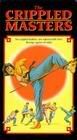
Reasons Why You Should Seek Out And Watch The Crippled Masters:

-The VHS box art is awesome yet tells you everything you need to know about the movie.

-The one sentence gist: two kung fu masters, one without arms the other without legs, fight an evil warlord who has a metal hump on his back.

-It's very educational. For example, did you know that having both your arms cut off produces very little blood and that a removed arm will leave a nub? What about that feudal China possessed concentrated acid capable of rendering a man legless? Betcha won't learn that in your smarty-smart books.

-Like Superman, you will believe that a man can fly. Except in the case of The Crippled Masters, you will believe that a man walking on his hands can outrun most guards.

-A guy with one arm and a nub fights alongside a man with no legs. It's the original high concept movie.

-C'mon, it's got a guy with one arm and another that's legless fighting. Do you really need a better reason to watch this movie?

Labels:

Friday, July 06, 2007

MasterChugs Theater: 'Transformers' (2007)

Some things to knock out first:

1. Happy birthday Sarah Spruill!
2. If you haven't read my review from last week, then you should know in advance that I'm a total Transformers geek. As such, there is a bit of a bias with this review.
3. I also really like peanut butter.

With that out of the way, let the review for Transformers, the 2007 Bay-centric version, begin! By the way, there will probably be a few spoilers here and there, so heed that as the warning.

Being a child of the 80s I am certainly familiar with the Transformers, primarily through their toy line and the animated cartoon and the 1986 movie. As the promotion for this new live-action/CGI version began to ramp up I quickly began to see the differences in the cartoon I enjoyed as a kid and what Michael Bay had done to turn the "robots in disguise" into a feature film that both kids and adults would enjoy. The only question is whether or not Bay and the script by Roberto Orci and Alex Kurtzman were successful, and for the most part it was.

Let me put emphasis on "for the most part."

The plot isn't any different from almost any iteration of the different series: on the planet Cybertron, two factions of super robot lifeforms, the heroic Autobots and the evil Decepticons, wage war for planetary supremacy. The Allspark, a device which can create new Transformer life, was launched into space thousands of years ago where it landed on planet Earth. Flash-forward to the present, a teenager named Sam Witwicky (Shia LaBeouf) has just gotten his first car, a rusty 1970s Camaro. As he quickly finds out, his car is in reality an Autobot named Bumblebee. Sam and his not-yet-girlfriend Mikaela (Megan Fox) are quickly caught up in the Autobot/Decepticon war which has finally reached Earth. The Decepticons intend not only to regain the Allspark, but to free their leader, Megatron (voiced by Hugo Weaving), from his icy tomb. Standing in their way are the Autobots, lead by Optimus Prime (voiced by Peter Cullen and the original voice of Prime in the G1 series), and the U.S. military, who want all robots gone, regardless of faction.

As far as the movie goes, this is signature Bay film. It's easy to see why he was probably the only dude alive capable of making it. The number of explosions per second in the last 20 minutes of the film easily eclipses the net total of the last five action films released combined--don't quote me please on that figure. The point is that this is the penultimate giant robot smashy-smashy action film of our time. Don't walk, run to see Transformers and bear witness to the next step in evolution and the rightful heir, at last, to the Star Wars legacy when it comes to the area of effects in film. These guys have taken things in an entirely new direction. It's one thing to animate a CGI King Kong for two hours, and quite another to render these two to five-story tall robots transforming from their clandestine cars or fighter jets only to pick up and do battle in and amongst the skyscrapers of down town Los Angeles with hundreds of cars and passersby running around in the thick of things. No one has ever seen anything like this before. And without much time, these Autobots are given real personality that carries and propels the young Sam to an age of heroism where he is willing to risk his life to save them as they have traveled across the galaxy to protect human kind from certain extinction at the hands of Megatron's Decepticons.

The effects companies behind the film, have officially thrown the hammer down, and the results are unbelievable. There was not one moment ... NOT ONE ... in this entire movie where I thought “hey, that’s good CGI”. Everything looks so real, and is done so well, that you just believe it. The personalities of the Autobots are surprisingly similar to their animated counterparts, and they live and breath with a personality that makes them all the more real. I have to say, though, the human element of the film really helps sell the giant robot action. Shia LaBeouf never once seems like he’s talking to a blue dot on a wall. It all works. You can tell by watching this film that you will be watching movies starring Shia for the next 30 years. He’s that good. There is a reason Spielberg is sold on this kid … it’s because the kid has “it.” He has a Tom Hanks level of “it,” and he makes the non robot filled scenes not only tolerable, but pretty damn good.

Now, the bad. The halves of the movie are very distinctly set up: you can tell the influence found from Spielberg (a large fan of the robots and also a producer of the film) in the first half (coming of age story for a boy) versus Bay's influence on the second half (giant robots make explosion! BOOM!). It almost takes away from the film. John Turturros’ character for example (which, for those of you that don’t know was apparently based on Michael Bay) is annoying as all can be. Anthony Anderson continues to grate on my nerves with his very existence. The deaths of three Transformers are almost essentially glossed over. Given that there aren't but a handful of giant stomping robots in the movie, that's slightly inexcusable. However, does it all really matter in the long run, given the source material? No way José.

As of writing this review, I've so far seen the movie three times already. I may possibly go again this weekend. I loved it that much. Megan Fox is scaldingly hot. If you’re looking for a thought provoking, gut wrenching, tear jerker of a film--this is not your movie. Avoid it like the plague. However, if you want to see the most amazing effects in the history of cinema (and I mean that), and giant robots beating the hell out of each other ... this is your film.

Labels:

Friday, June 29, 2007

MasterChugs Theater: 'Transformers: The Movie' (1986)

Straight up front, I won't lie to any of you--this is one of my most difficult reviews to write. Let it be known first of all that I'm a total fan of the Transformers (dork, nerd, and geek cred has now been established). I can easily name any of the characters released as toys in the seven years of "Generation 1." I own complete volumes of all of the shows on DVD. I can identify episode synopses, continuity errors, and animation gaffs within seconds. That's why it's a little hard to say this: this movie isn't that great. It's not horrible, but it's certainly not "Citizen Kane."

Set in 2005 (a considerable way into the future at the time), the original Transformers: The Movie plunges headfirst into the age-old civil war raging between the goody-goody Autobots and the nasty-pieces-of-work that are the Decepticons. Unicron (voiced by both Orson Welles and Leonard Nimoy due to Welles passing away during production), a giant Rik Waller of a robot who scoffs entire planets where the rest of us would settle for a kebab, is treating the galaxy like a giant all-you-can-eat buffet. The only thing that'll stop him in his glutinous tracks is the Autobot Matrix of Leadership--but can the Autobots use it to fill their requisite quota of good before Galvatron, a Nimoy-voiced Decepticon leader, fulfills a few plans of his own?

Of course they can, but not without traumatizing zillions of youngsters in the 80s. Gigantic spoiler alert: Optimus Prime, the big red and blue truck that pledged freedom for all people (but has no problem falling into a trap where he's then disassembled into a red and blue robotic alligator that attacks his own soldiers), is killed in battle with his nemesis Megatron (the guy that turned into a gun and thus spurred the urban legend that a cop killed a kid because of his toy) early on in the movie. If you were a male between the ages of 3 and 11 when you saw this movie in the theater and didn't cry when this scene happened, I'd like to congratulate you on your title of New Hitler. That's also what set this movie apart from the show: it was definitely a big budget movie. With voice talent like Nimoy, Welles, Judd Nelson, Robert Stack and Eric Idle, cleaner animation than the show, excised curse words at times, and the deaths of multiple robots, this was set to clean out at the theaters. Story wise ... not so much; however, it's what's to be expected from a series about giant robots stomping around that's used to sell toys to children.

Transformers: The Movie is, at its core, a glorified toy commercial. If you were, or still are into Transformers, then you must have seen this film already. Therefore you don’t need me to tell you to see it again because you probably own a copy and have probably already seen it 10,000 times. If you like anime films and haven’t seen this one, I do suggest you check it out. Even for non-Transformers junkies, this is should be a fun ride. But I think the people that grew up with Transformers will get the biggest kick out of this. This one was made for the fans (so we could buy more toys ... but who cares) and only the fans will be able to appreciate it to its fullest. Still, that's not a bad thing, as long they take showers regularly. For the casual fans, just go into it with some friends, make fun of stuff, and just revisit nostalgia.

While you're also checking out movies about giant robots blowing things up, check out Michael Bay's Transformers opening in theaters on Tuesday, July 3 (though there are reports of it opening in select areas the night of Monday, July 2). Like it's animated predecessor, don't go into the movie expecting some cinematic beauty, but just a really awesome action movie, and you can't really go wrong. It's got this Transfan's early on seal of approval. And yes, I can totally answer your nerdy questions, obviously.

Labels:

Friday, June 22, 2007

MasterChugs Theater: 'Duck Soup'

A quick warning to all: Duck Soup is the funniest movie ever made. There. I said it. Now, onto the rest of the review.

If the Marx Brothers are considered to form their own sub-genre of comedy, then Duck Soup is the absolute definition of their art. So often in Hollywood, quirky, offbeat performers eventually earn so much money with low-budget projects that the studios offer them enormous budgets to make even bigger pictures. The standard logic suggests that, if they made this much money with a budget of this size, imagine how much they could rake in if we give them a budget that's twice as big. This mentality usually leads to bloated, self- indulgent flops. Hollywood's bankbook is littered with the red ink covered titles, like The Blues Brothers, Big Top Pee-Wee and 1941. Bigger isn't always better ... except in some cases. The Marx Brothers were quintessential absurdists, turning the conventions of social protocol on ear by paying them no heed and following their madcap ideas into the realm of the insane. Half of their humor comes not from their already hilarious antics, but from the fact that seemingly sane people ludicrously continue to take them seriously, expecting normal behavior from them. When the Marx's repeatedly deflate their unearned dignity within the conventions of polite society, we cheer them on and laugh at the embalmed representatives of proper behavior who never quite figure out that it is them, and not the Marx's, who are out of step with reasonable conduct.

Minister of Finance: "Something must be done! War would mean a prohibitive increase in our taxes."
Chico: "Hey, I got an uncle lives in Taxes."
Minister of Finance: "No, I'm talking about taxes--money, dollars."
Chico: "Dollars! There's-a where my uncle lives! Dollars, Taxes!"

The movie opens like many of the musical comedies made in the very early 30s. It is not unlike Lubitsch's quaint and hugely successful The Smiling Lieutenant (1931). In Duck Soup, Mrs. Teasdale (Margaret Dumont) will only fund the ailing economy if Rufus T. Firefly (Groucho), "a progressive, fearless fighter," is installed as the leader of Freedonia. The duplicitous ambassador of Sylvania has other plans. He intends to marry Mrs. Teasdale and rule Freedonia himself. At a reception to welcome Firefly, the guard of honor enters followed by a troupe of ballerinas who scatter flowers in preparation for the arrival of the new leader. The camera swoops upward, the satire intrinsic to musical comedy is forced to its extreme.

Six minutes into this 68-minute film the illusion of pomp and grandeur is sabotaged when Firefly (Groucho) appears, not via the expected grand entrance but down a fireman's pole, behind the action. The humor begins and from then, until the end, the film virtually operates as two discreet entities. The Marx Brothers appear in a separate film to the straight characters, that is, the performers who are not comedians and who never get the joke. Nevertheless, Edgar Kennedy, the veteran silent film comedian featured in many Charlie Chaplin and Laurel and Hardy shorts, appears in three sequences and is definitely 'in' on the joke. His reaction to the Marx Brothers' behavior is in stark contrast to that displayed by the other characters within the film. Kennedy is the only character who is allowed to inflict physical discomfort upon any of the brothers. In the first of his three scenes, the synchronicity between Kennedy, Chico and Harpo as they exchange hats and leg shakes is remarkable. Kennedy's frustration grows as he suffers increasing indignities at the hands of the two brothers, eventually he responds by squirting water down Harpo's pants. Harpo reacts with disbelief and then slinks away, beaten, for the moment anyway.

Firefly: "Not that I care, but where is your husband?"
Mrs. Teasdale: "Why, he's dead."
Firefly: "I'll bet he's just using that as an excuse."
Mrs. Teasdale: "I was with him to the very end."
Firefly: "Hmmph. No wonder he passed away."
Mrs. Teasdale: "I held him in my arms and kissed him."
Firefly: "Oh, I see. Then, it was murder. Will you marry me? Did he leave you any money? Answer the second question first."
Mrs. Teasdale: "He left me his entire fortune."
Firefly: "Is that so? Can't you see what I'm trying to tell you? I love you."
Mrs. Teasdale: "Oh, your Excellency!"
Firefly: "You're not so bad yourself."

The film was directed by Leo McCarey, who was undoubtedly the sprightliest of all the Marx Brothers directors; they were often saddled with studio regulars like Sam Wood and Norman Z. McLeod. McCarey had directed dozens of silent comic two-reelers and knew how to keep the action moving at lightning pace, knew when to disregard plot for comedy and--above all--knew how to let the brothers loose without completely losing control of them. Rapid-fire delivery by the brothers, as evidenced in this review, helps to move the movie going from one gag to another. This is classic comedy at it's best.

Mrs. Teasdale: "Oh, I want to present to you Ambassador Trentino of Sylvania. Having him with us today is indeed a great pleasure."
Trentino: "Thank you, but I can't stay very long."
Firefly: "That's even a greater pleasure. Now, how about lending this country $20,000,000 dollars, you old skinflint."
Trentino: "$20,000,000 dollars is a lot of money. I'd have to take that up with my Minister of Finance."
Firefly: "Well, in the meantime, could you let me have $12 dollars until payday?
Trentino: $12 dollars?"
Firefly: "Don't be scared. You'll get it back. I'll give you my personal note for 90 days. If it isn't paid by then, you can keep the note."
Trentino: "Your Excellency? Haven't we seen each other somewhere before?"
Firefly: "I don't think so. I'm not sure I'm seeing you now. It must be something I ate."
Trentino (insulted): "Look here Sir, are you trying to ... ?"
Firefly: "Don't look now, but there's one man too many in this room, and I think it's you."

Dated as Duck Soup inevitably is in some respects, it has moments that seem startlingly modern, as when Groucho calls for help during the closing battle sequence, and the response is stock footage edited together out of newsreel shots of fire engines, elephants, motorcycles, you name it. There is an odd moment when Harpo shows Groucho a dog house tattooed on his stomach, and in a special effect a real dog emerges and barks at him. The brothers broke the classical structure of movie comedy and glued it back again haphazardly, and nothing was ever the same. This is quite possibly my favorite movie of all time.

Fun fact: Why the title? The critic Tim Dirks explains: "It is claimed that Groucho provided the following recipe: 'Take two turkeys, one goose, four cabbages, but no duck, and mix them together. After one taste, you'll duck soup the rest of your life.'"

Labels: ,

Friday, June 15, 2007

MasterChugs Theater: 'Hot Fuzz'

The twisted minds behind the 2004 zombie comedy Shaun of the Dead take on the world of Hollywood action movies with Hot Fuzz, an outrageously funny film directed by Edgar Wright and starring Simon Pegg and Nick Frost. Loaded with laughs, Hot Fuzz is so good you’ll need to see it twice just to catch what you missed the first time around. I recommend more than twice though.

Pegg is Sergeant Nicholas Angel, the Met's top cop. He's so good, in fact, that to prevent him from out-performing his fellow officers he's reassigned to Sandford, the sort of area that makes that town in "Newhart" look like Los Angeles. But if Sandford is a sleepy market town, it's home to some very real nightmares. Not that local coppers like loveable oaf Danny Butterman (Frost) see anything suspicious about Sandford's absurd number of "accidents." Angel is no ordinary constable and launches an investigation, much to the amusement of his bumbling boss and his colleagues.

The supporting cast features just about everyone who's appeared in a British movie. Edward Woodward, Billie Whitelaw, Timothy Dalton, Anne Reid, Adam Buxton, Kevin Eldon, Paul Freeman, Bill Bailey--it's hard to know what's more remarkable, the fact they got so many stars involved or the fact that they're all given great things to do. While it's wrong to single anyone out, special mention must go to Dalton who plays his mustache-twirling villain with such relish his performance ought to come with cheddar and a floury bap.

Wright and Pegg both say they’re not making fun of over-the-top action movies with Hot Fuzz and never intended their film to be a spoof or parody of the genre. But Hot Fuzz does indeed poke a sharp stick at a few of the staples of the action genre including those classic rapid-fire shoot 'em up sequences in which not a single bullet connects with its target. Frost’s character is obsessed with Michael Bay’s Bad Boys II and the 1991 Patrick Swayze/Keanu Reeves movie Point Break, and the action in Hot Fuzz is in large part inspired by those two cop dramas. There’s even a hysterical scene with Frost and Pegg flying through the air shooting at the bad guys. Priceless.

Our writers have studied the genre and manage to include in Hot Fuzz scenes that replicate or riff on the most commonly used action sequences from action movies, while also adding their own decidedly British take on the typical set-ups. The result is something both fresh and familiar. An impressive and at times ridiculously goofy film, Hot Fuzz proves the Shaun of the Dead team is equally as adept at finding the funny in living characters as they were with the undead.

Labels: